
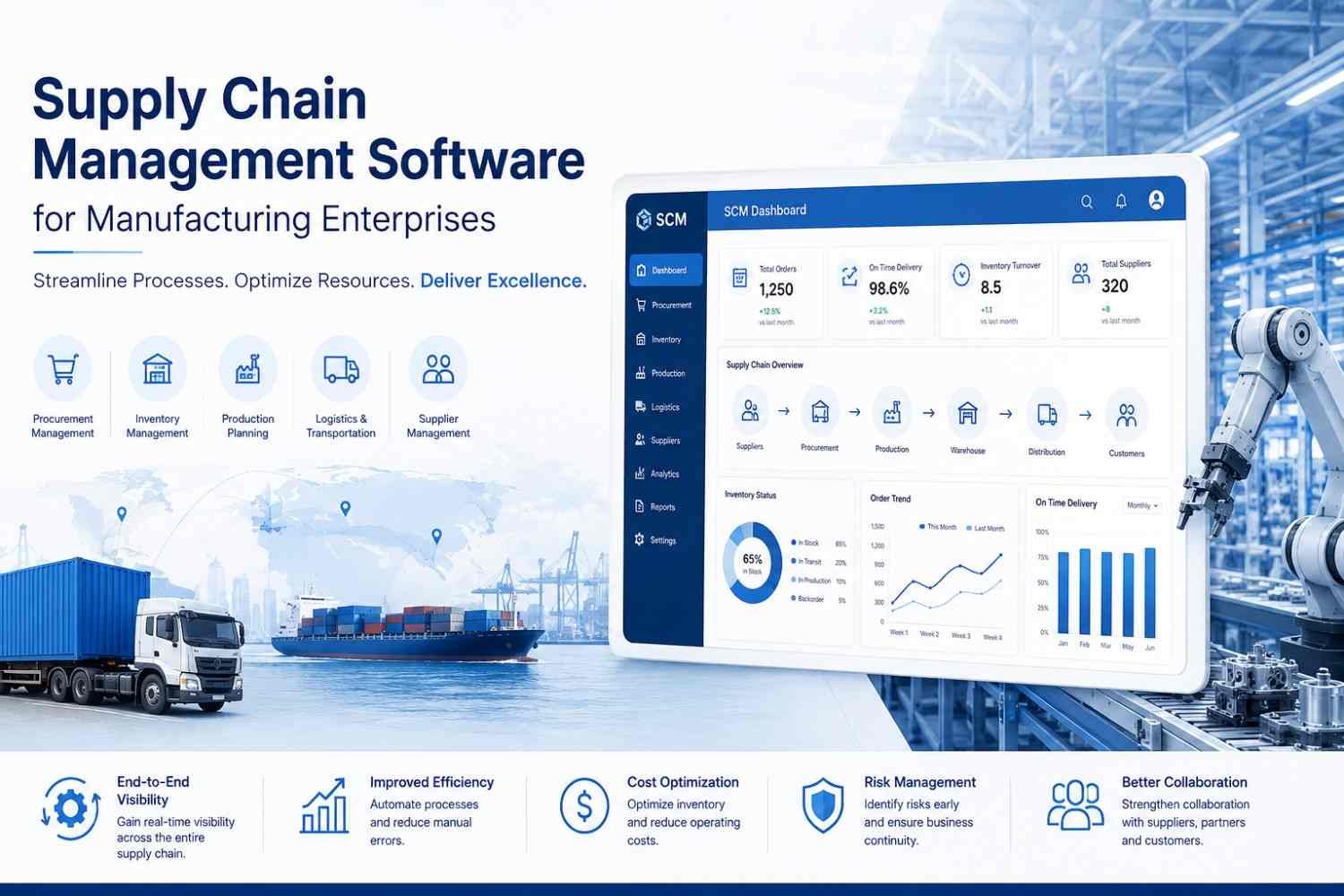
Modern manufacturing companies operate in an increasingly complex global environment. Raw material sourcing, supplier management, inventory planning, logistics operations, production scheduling, and customer fulfillment all play critical roles in business success.
A single disruption can result in production delays, increased operational costs, inventory shortages, lost revenue, and customer dissatisfaction.
To remain competitive, manufacturers are investing heavily in Supply Chain Management Software (SCM Software).
Modern supply chain platforms combine artificial intelligence, predictive analytics, cloud computing, procurement automation, logistics management, and business intelligence to create highly efficient and resilient supply chain operations.
What Is Supply Chain Management Software?
Supply Chain Management Software is a technology platform designed to help businesses plan, manage, monitor, and optimize supply chain operations.
The software connects procurement, inventory management, logistics, supplier management, warehouse operations, transportation management, demand forecasting, and supply chain analytics. The goal is to improve visibility, efficiency, and profitability throughout the supply chain.
Why Manufacturing Enterprises Need Supply Chain Management Software
Manufacturers face growing challenges such as global supply chain disruptions, rising transportation costs, inventory inefficiencies, supplier risks, demand fluctuations, and compliance requirements. SCM Software provides real-time visibility and control over these complex operations.
Key Benefits of Supply Chain Management Software
1. Enhanced Supply Chain Visibility
Businesses can monitor inventory levels, supplier performance, shipment status, warehouse operations, and production schedules in real time.
2. Inventory Optimization
Inventory Optimization Software helps maintain the ideal balance between supply and demand, reducing carrying costs and preventing stock shortages.
3. Procurement Automation
Automates purchase requests, vendor approvals, contract management, and purchase orders to improve efficiency and reduce errors.
4. Logistics Optimization
Improves transportation planning, shipment tracking, route optimization, and customer service.
Core Features of Modern Supply Chain Software
Demand Forecasting Software
AI-powered forecasting helps predict customer demand, improve production planning, and reduce excess inventory.
Warehouse & Transportation Management
Supports inventory tracking, order fulfillment, shipment planning, and freight cost management.
Supplier Management Software
Helps evaluate supplier performance, monitor risks, and improve supplier relationships.
AI-Powered Supply Chain Management
AI can predict disruptions, forecast demand, optimize inventory, and enhance logistics planning, helping organizations move from reactive to proactive management.
Cloud-Based Supply Chain Software
Cloud solutions offer scalability, remote accessibility, lower IT costs, and automatic updates.
Supply Chain Management Trends for 2026
- AI-Driven Supply Chains
- Real-Time Supply Chain Visibility
- ESG Supply Chain Reporting
- Predictive Supply Chain Analytics
Frequently Asked Questions
What is Supply Chain Management Software?
Supply Chain Management Software helps businesses manage procurement, inventory, logistics, transportation, and supplier operations.
Why is Supply Chain Visibility Important?
Visibility enables organizations to monitor operations in real time and respond quickly to disruptions.
How Does AI Improve Supply Chain Operations?
AI improves forecasting, inventory optimization, logistics planning, and risk management.
Conclusion
Supply Chain Management Software has become one of the most critical enterprise technology investments for modern manufacturers.
By combining logistics software, procurement automation, inventory optimization, predictive analytics, business intelligence, enterprise risk management, and AI-driven decision-making, organizations can build resilient and efficient supply chains.
As manufacturing enterprises continue investing in digital transformation, Supply Chain Management Software will remain a high-priority technology category throughout 2026 and beyond.